
Specify Topic & Research Preferences for AI Automation Article
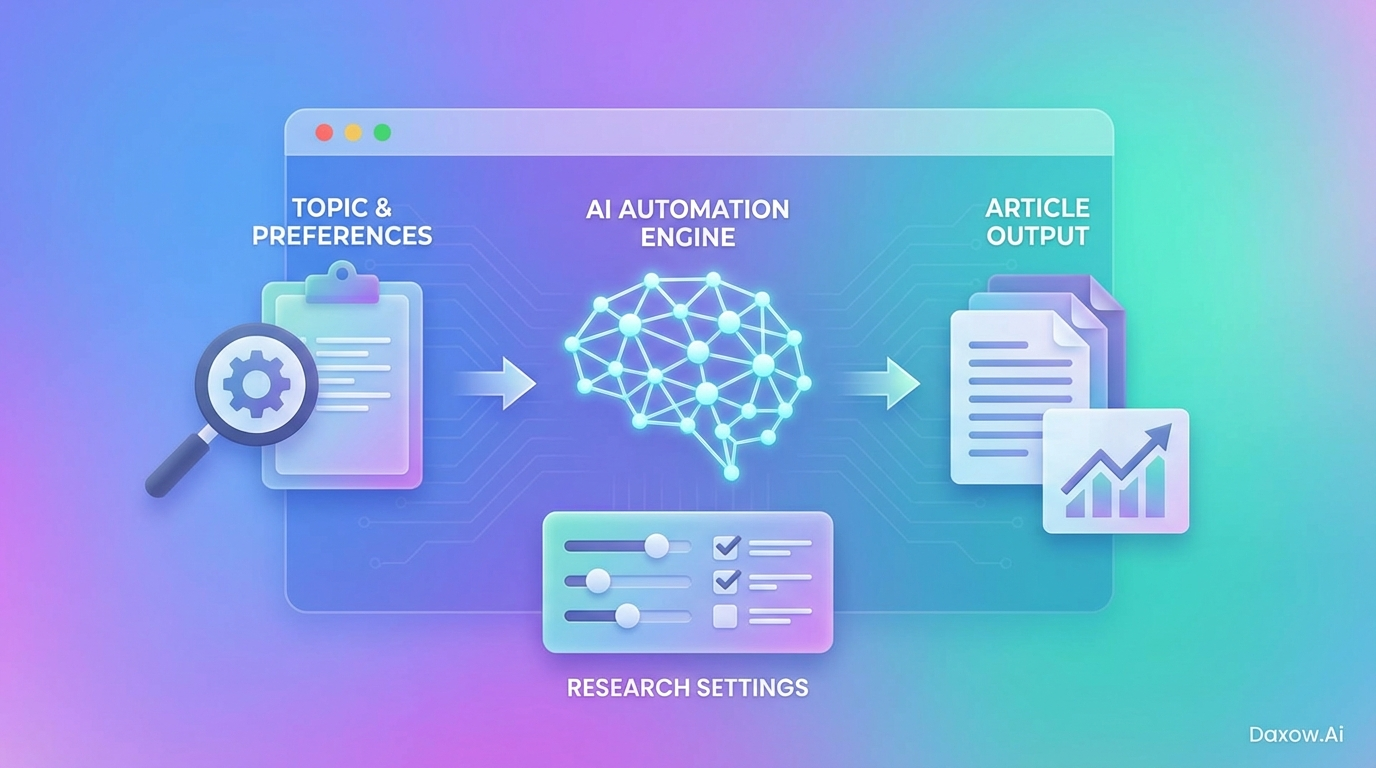
Client prompt requesting topic selection, research preference, industry focus, and CTA before writing a 1500–2000 word AI automation article.
AI-Powered Process Automation for Enterprise Workflows
Estimated reading time: 8 minutes
Key Takeaways
- AI-powered process automation enhances efficiency and reduces operational costs in enterprise workflows.
- Integration of AI with existing enterprise systems leads to seamless digital transformation.
- Enterprises can achieve higher accuracy and scalability through intelligent automation technologies.
- Daxow.ai offers tailored AI automation solutions designed to optimize complex business operations.
Understanding AI-Powered Process Automation
AI-powered process automation refers to the use of artificial intelligence technologies to automate complex workflows and business processes within an enterprise. Unlike traditional automation that relies heavily on pre-defined rules, AI-powered automation leverages machine learning, natural language processing, and robotic process automation (RPA) to handle unstructured data, adapt to changes, and perform intelligent decision-making. This capability enables enterprises to streamline operations, reduce manual intervention, and accelerate throughput across various departments such as finance, HR, supply chain, and customer service.
The growing adoption of AI-driven automation is fueled by the need for agility and efficiency in today’s fast-paced markets. Enterprises deploying these solutions experience enhanced data accuracy, improved compliance, and a significant reduction in turnaround times, resulting in stronger competitive advantage.
Benefits for Enterprise Workflows
Integrating AI-powered process automation into enterprise workflows yields multiple benefits:
- Increased Efficiency: Automating repetitive tasks such as data entry, invoice processing, or report generation frees up valuable human resources.
- Improved Accuracy: AI algorithms reduce errors caused by manual processing and ensure data consistency.
- Enhanced Scalability: Enterprises can manage increasing transaction volumes without proportionally increasing costs.
- Better Compliance: Automated audit trails and real-time monitoring help maintain regulatory compliance more effectively.
- Faster Decision-Making: AI-enabled analytics provide deeper insights that accelerate strategic planning and operational adjustments.
Key Technologies Enabling Automation
Several core AI technologies power enterprise process automation:
- Robotic Process Automation (RPA): Software bots that automate repetitive, rule-based tasks.
- Machine Learning (ML): Enables systems to learn from data patterns to improve task execution over time.
- Natural Language Processing (NLP): Allows automation of text and speech understanding, enabling interactions such as processing emails or chatbots.
- Computer Vision: Used to interpret visual data for document scanning, quality inspection, or inventory management.
- Intelligent Document Processing (IDP): Combines AI techniques to extract, classify, and validate data from documents automatically.
These technologies often integrate seamlessly through platforms like Daxow.ai’s AI automation solutions, providing end-to-end workflow optimization.
Steps to Implement AI Automation
Successfully deploying AI-powered automation requires a strategic approach:
- Identify Automation Opportunities: Analyze existing workflows to pinpoint repetitive and high-volume tasks ideal for automation.
- Set Clear Goals: Define KPIs such as processing speed, error reduction, and cost savings to measure success.
- Choose the Right Technologies: Select AI tools and platforms that align with business requirements and integrate well with current systems.
- Develop and Test Solutions: Build automation processes and run pilots to validate functionality and impact.
- Train Staff and Monitor Performance: Ensure team readiness and continuously optimize automated workflows based on data insights.
Enterprises partnering with Daxow.ai benefit from expert guidance and customized AI automation deployments tailored to unique operational needs.
Case Study: Daxow.ai Automation Solutions
A leading financial services enterprise faced challenges with time-consuming manual reconciliation and compliance reporting. After engaging with Daxow.ai, they implemented an AI-powered automation platform combining RPA and intelligent document processing.
The results included a 60% reduction in processing times, enhanced data accuracy, and improved regulatory compliance. The automation also unlocked the ability for analysts to focus on higher-value strategic tasks.
This case exemplifies how AI automation tailored by Daxow.ai can deliver tangible business outcomes and accelerate digital transformation.
To explore similar solutions for your enterprise workflows, visit our Automation Services and AI Process Optimization pages.
Frequently Asked Questions
What types of enterprise workflows benefit most from AI automation?
Workflows with repetitive, rule-based tasks such as invoice processing, customer onboarding, compliance checks, and data entry benefit greatly from AI automation.
How does AI automation improve compliance?
AI automation provides consistent documentation, audit trails, real-time monitoring, and error reduction which help maintain and demonstrate regulatory compliance.
Can existing legacy systems integrate with AI-powered automation?
Yes, many AI automation platforms are designed to integrate with legacy systems via APIs or middleware, enabling smooth adaptation without full system replacement.
What is the typical ROI timeline for implementing AI process automation?
Return on investment varies depending on project scope but many enterprises observe significant cost savings and efficiency gains within 6 to 12 months after deployment.