

Provide Topic and Research for Your 1500-2000 Word Article
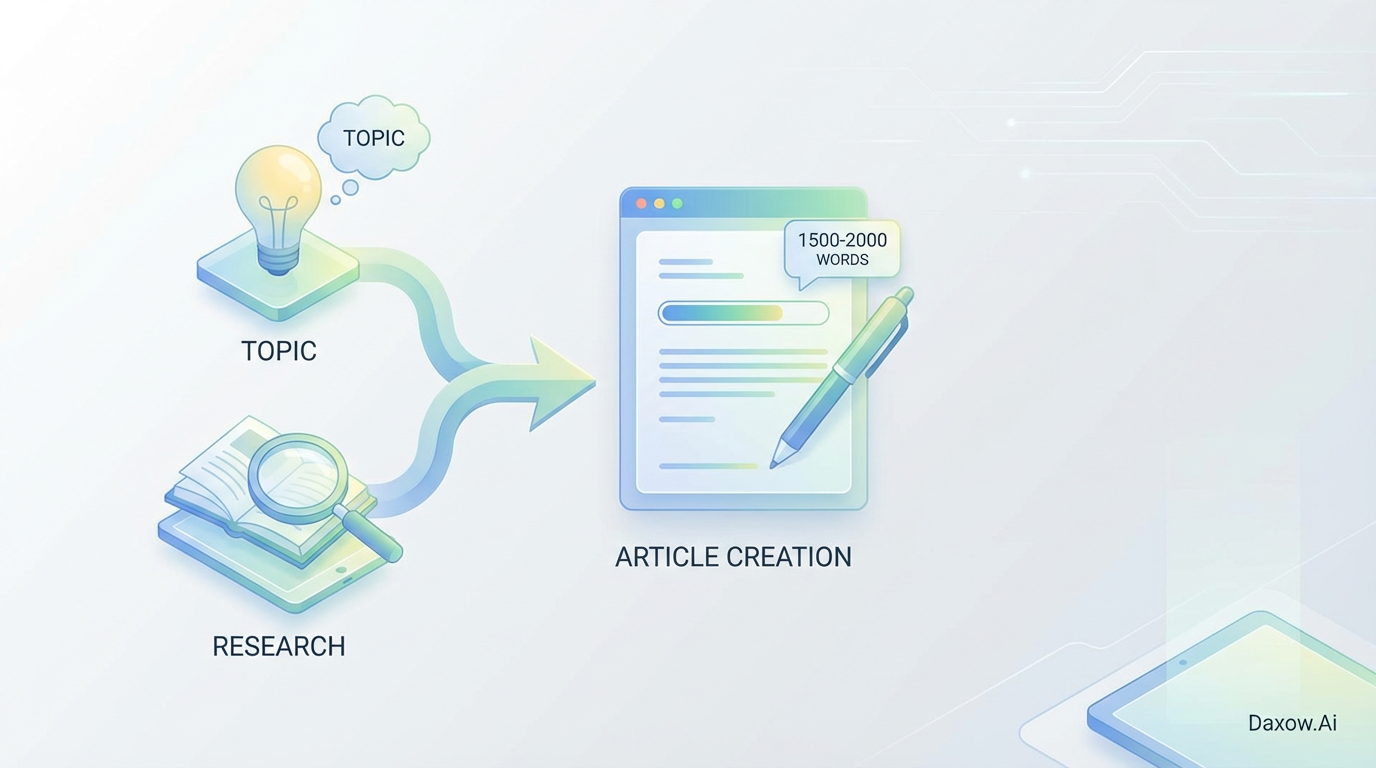
Request the article's main topic, research, target industries, and preferences so the writer can craft a 1500-2000 word post.
Intelligent Document Processing and Data Extraction: Transforming Business Efficiency
Estimated reading time: 9 minutes
Key Takeaways
- Intelligent Document Processing (IDP) leverages AI to automate data extraction from complex documents.
- IDP enhances accuracy and reduces manual errors compared to traditional methods.
- Industries such as finance, healthcare, and legal benefit greatly from implementing IDP solutions.
- Daxow.ai offers tailored IDP technologies that seamlessly integrate with existing workflows.
- Adopting IDP can lead to significant operational cost savings and faster turnaround times.
What Is Intelligent Document Processing?
Intelligent Document Processing (IDP) is an advanced technology that combines artificial intelligence, machine learning, natural language processing, and optical character recognition (OCR) to automatically extract, classify, and validate data from structured and unstructured documents. Unlike traditional data capture tools, IDP systems can understand context and interpret complex data fields across multiple document types, including invoices, contracts, healthcare forms, and emails.
This holistic approach enables businesses to automate labor-intensive manual processes while achieving higher accuracy and compliance standards.
How Does Intelligent Document Processing Work?
IDP solutions typically operate in several key phases:
- Document Ingestion: Documents from various sources and formats (PDFs, scans, emails) are collected into the system.
- Preprocessing: Images are cleaned, enhanced, and normalized to improve recognition accuracy.
- Classification: AI models categorize documents based on content type (e.g., invoice, purchase order, medical record).
- Data Extraction: OCR and natural language algorithms extract key data points such as dates, numbers, names, and terms.
- Validation and Verification: Extracted data undergoes quality checks using rule-based and AI validation techniques to reduce errors.
- Integration: Clean data is routed into enterprise systems like ERPs, CRMs, or databases for further processing.
This end-to-end process streamlines workflows that traditionally required human intervention for data entry and verification.
Key Benefits of IDP
Intelligent Document Processing delivers numerous advantages that can transform operational efficiency:
- Increased Accuracy: AI-driven extraction minimizes manual errors and improves data quality.
- Operational Efficiency: Automates time-consuming tasks, allowing employees to focus on higher-value activities.
- Cost Reduction: Reduces expenses from paper handling, data entry labor, and error correction.
- Faster Processing Times: Enables rapid turnaround of large document volumes, critical in finance and healthcare industries.
- Improved Compliance: Ensures consistent data standards, audit trails, and regulatory adherence.
- Scalability: Handles growing document volumes without proportional increases in staffing.
These benefits collectively enhance competitiveness and customer satisfaction.
Industry Use Cases
Intelligent Document Processing is applicable across a wide spectrum of industries. Below are examples illustrating its value:
Finance
Financial institutions use IDP to automate invoice processing, loan application intake, and KYC documentation. For example, IDP reduces loan approval times by extracting relevant data across multiple documents to expedite credit decisions.
Healthcare
Healthcare providers leverage IDP to digitize patient records, insurance claims, and medical forms. This speeds up billing cycles and improves patient data accuracy, enhancing clinical and administrative workflows.
Legal
Law firms employ IDP to analyze contracts and legal filings, extracting clauses and terms for risk assessment and case management. Automation accelerates due diligence and compliance reviews.
Supply Chain & Logistics
Logistics companies benefit from IDP by automating bills of lading, shipping manifests, and customs forms, reducing errors and shipment delays.
Across these sectors, Daxow.ai tailors solutions to address specific document challenges with seamless integration into existing IT ecosystems.
Implementing IDP with Daxow.ai
Daxow.ai specializes in delivering intelligent automation solutions that include advanced document processing capabilities. Our approach involves:
- Consultation and Needs Assessment: Understanding your unique document workflows and business goals.
- Custom AI Model Training: Developing machine learning models tailored to your document types and languages.
- Integration: Seamlessly connecting IDP engines with ERPs, CRMs, and other enterprise software.
- Continuous Optimization: Monitoring and refining AI performance to match evolving business needs.
By partnering with Daxow.ai, companies unlock the full potential of their document assets, drastically cut processing times, and free up valuable employee capacity.
Explore Daxow.ai's Intelligent Document Processing solutions and learn how we can help automate data extraction with precision and speed.
Future Trends in Document Processing
The future of Intelligent Document Processing is poised for continuous innovation driven by advances in AI and cloud technology:
- Increased Use of Natural Language Understanding: More sophisticated language models will improve contextual understanding and sentiment analysis.
- Real-Time Processing: Expanding IDP capabilities allowing instant extraction and action on streaming document inputs.
- Hyperautomation: Combining IDP with robotic process automation (RPA) to create fully autonomous workflows.
- Edge Processing: Processing sensitive documents locally on devices to enhance data privacy and compliance.
- Cross-Industry Standardization: Growth of unified data standards to simplify integration and interoperability.
Businesses who adopt these emerging capabilities early will gain substantial competitive advantages, and Daxow.ai remains at the forefront of delivering next-generation document automation.
Frequently Asked Questions
What types of documents can Intelligent Document Processing handle?
IDP can process a wide variety of document types including structured forms like invoices and purchase orders, semi-structured documents like claims and contracts, and unstructured text such as emails and letters.
How does IDP improve over traditional OCR?
While traditional OCR extracts characters from images, IDP understands document context, extracts relevant data points intelligently, performs validation, and automates classification, leading to higher accuracy and workflow automation.
Can IDP be integrated with existing systems?
Yes, modern IDP platforms, including offerings from Daxow.ai, are designed for seamless integration with ERPs, CRMs, content management systems, and databases via APIs or connectors.
Is training AI models for IDP time-consuming?
Initial training requires some time to label and teach models specific document nuances. However, pre-trained models and transfer learning techniques significantly reduce setup time, and ongoing optimization improves accuracy continuously.