
Select a Topic and Brief for Your AI Article
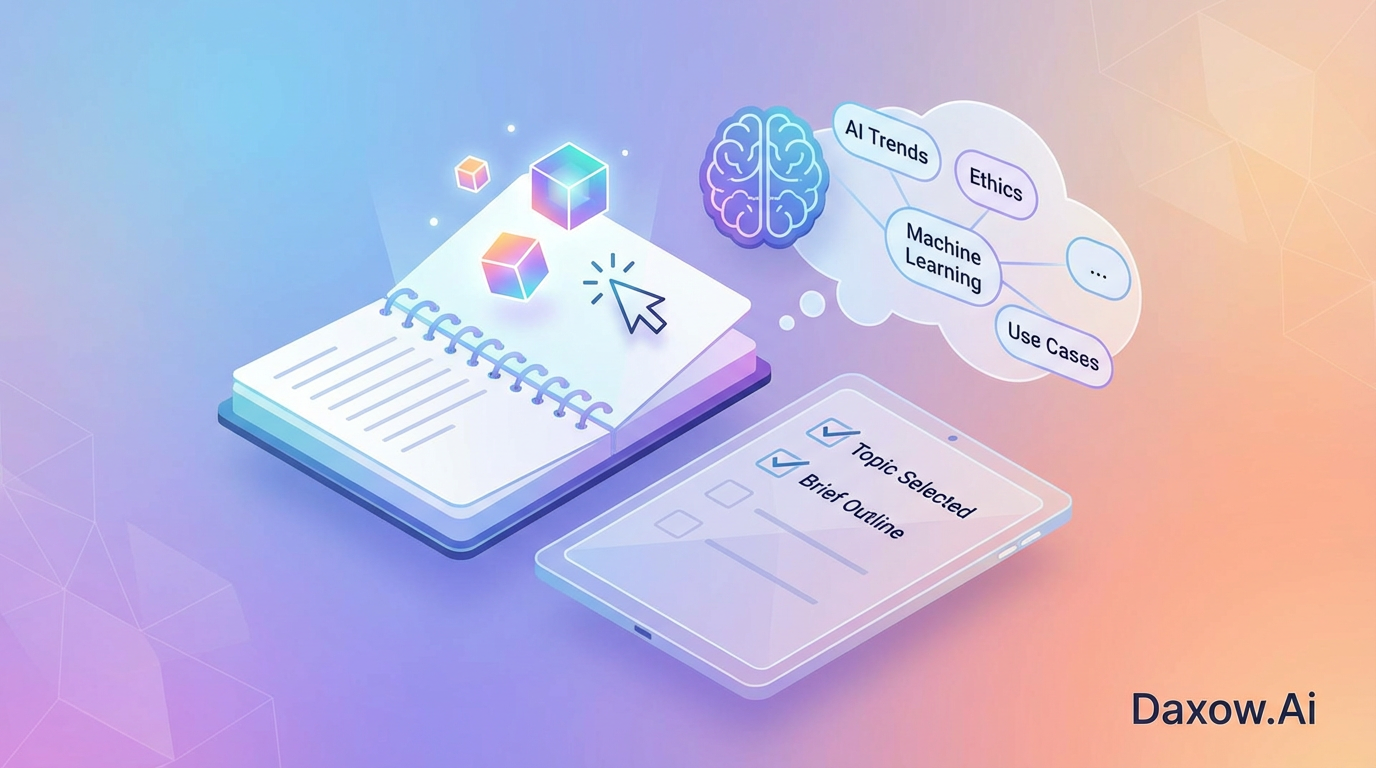
Choose one of the suggested AI topics, preferred industry focus, and any research or company details so I can draft a 1500–2000 word article.
AI-Powered Customer Service Automation: Transforming Business Interactions
Estimated reading time: 12 minutes
Key Takeaways
- AI-powered automation is revolutionizing customer service by enhancing efficiency and personalization.
- Conversational AI tools like chatbots and virtual assistants are integral to scalable customer interactions.
- Automating routine inquiries liberates human agents to focus on complex, value-added tasks.
- Data-driven insights from AI improve customer satisfaction and operational decision-making.
- Daxow.ai offers tailored AI automation solutions designed to optimize customer service workflows.
Table of Contents
Introduction to AI Customer Service Automation
In today’s rapidly evolving digital landscape, AI-powered customer service automation has become a critical component for businesses aiming to deliver efficient and personalized support. By leveraging artificial intelligence, companies can automate routine inquiries, provide instant responses, and gather valuable data insights. This transformative technology not only enhances customer experience but also reduces operational costs and improves scalability for businesses of all sizes.
Customer service automation powered by AI involves integrating intelligent systems that understand natural language, process queries, and deliver relevant solutions without human intervention. These capabilities empower businesses to respond around the clock, resolve issues instantly, and maintain consistent service quality.
Key Technologies Enabling Automation
The development of AI-driven customer service automation is facilitated by several cutting-edge technologies:
- Natural Language Processing (NLP): NLP enables machines to understand and interpret human language, allowing chatbots and virtual assistants to engage customers naturally and effectively.
- Machine Learning (ML): ML models continuously learn from interactions, improving response accuracy and personalizing customer experiences over time.
- Conversational AI: This technology powers chatbots and voice assistants capable of carrying out dynamic dialogues that mimic human conversations.
- Robotic Process Automation (RPA): RPA automates repetitive back-office tasks, such as data entry and ticket routing, streamlining customer service workflows.
- Sentiment Analysis: AI systems analyze customer emotions to prioritize responses, escalate issues proactively, and tailor interactions based on mood detection.
Benefits of AI in Customer Service
Incorporating AI-powered automation presents numerous advantages to businesses and customers alike:
- 24/7 Availability: AI chatbots and virtual assistants operate continuously, providing instant support regardless of time zones or business hours.
- Cost Efficiency: Automating routine inquiries reduces the dependency on large customer support teams, lowering labor costs.
- Improved Response Times: AI handles multiple interactions simultaneously, drastically reducing wait times for customers.
- Personalized Customer Journeys: Intelligent systems analyze customer data to tailor recommendations and solutions, increasing satisfaction and loyalty.
- Increased Accuracy and Consistency: AI minimizes human errors and ensures standardized responses aligned with company policies.
- Actionable Insights: Automated customer service generates rich data, enabling businesses to identify trends, pain points, and opportunities for improvement.
Implementation Challenges and Solutions
While AI customer service automation offers significant benefits, organizations may encounter challenges during adoption:
- Integration Complexity: Merging AI systems with existing CRM, ERP, and communication platforms requires careful planning and technical expertise.
- Data Privacy Concerns: Handling sensitive customer data demands stringent security measures and compliance with regulations such as GDPR.
- Maintaining Human Touch: Over-reliance on automation can diminish personalized service; hybrid models combining AI and human agents are recommended.
- Training and Maintenance: Continuous updates and training are essential to keep AI models relevant and effective.
Addressing these challenges involves selecting flexible AI platforms, employing best practices in data governance, and fostering collaboration between AI technology and human customer service teams.
The Role of Daxow.ai in Customer Service Automation
Daxow.ai specializes in delivering AI automation solutions tailored to streamline customer service operations. With expertise in building intelligent workflows, Daxow.ai integrates conversational AI, robotic process automation, and data analytics to create seamless customer support experiences.
Businesses leveraging Daxow.ai benefit from scalable automation platforms designed to reduce response times, enhance personalization, and optimize resource allocation. By partnering with Daxow.ai, companies can harness the full potential of AI-driven customer service without compromising quality or security.
Learn more about Daxow.ai’s AI automation products and how they fit into your customer service strategy. For tailored solutions, explore our consulting and implementation services.
Future Trends in AI Customer Service Automation
The future of AI in customer service is poised for transformative advances driven by emerging technology trends:
- Hyper-Personalization: AI will leverage increasingly sophisticated data models to anticipate customer needs before queries arise.
- Voice-Enabled Interfaces: Voice assistants will gain prominence, enabling hands-free, natural dialog interactions.
- Emotional AI: Next-generation systems will better interpret customer emotions, adjusting tone and responses dynamically.
- Integration with IoT Devices: AI automation will connect seamlessly with smart devices to deliver proactive support.
- AI-Augmented Agents: Human agents will work alongside AI tools that provide real-time insights and suggestions.
Companies investing in these innovations, especially through partners like Daxow.ai, will be best positioned to drive customer loyalty and operational excellence in an increasingly digital world.
Frequently Asked Questions
What types of customer interactions can AI automate?
AI can automate routine inquiries such as FAQs, order tracking, appointment scheduling, basic troubleshooting, and payment processing, freeing human agents for complex tasks.
How does AI improve the quality of customer service?
AI enhances quality by providing instant responses, delivering personalized recommendations, maintaining consistent messaging, and continuously learning from interactions to improve accuracy.
Is AI customer service automation secure?
Yes, when implemented with appropriate data privacy protocols and encryption, AI automation platforms adhere to security standards and comply with regulations like GDPR to protect customer data.
Can AI completely replace human customer service agents?
AI complements human agents but does not fully replace them. Human oversight remains essential for complex, sensitive, or high-emotion interactions, ensuring optimal customer experience.