
Choose an AI Automation Blog Topic
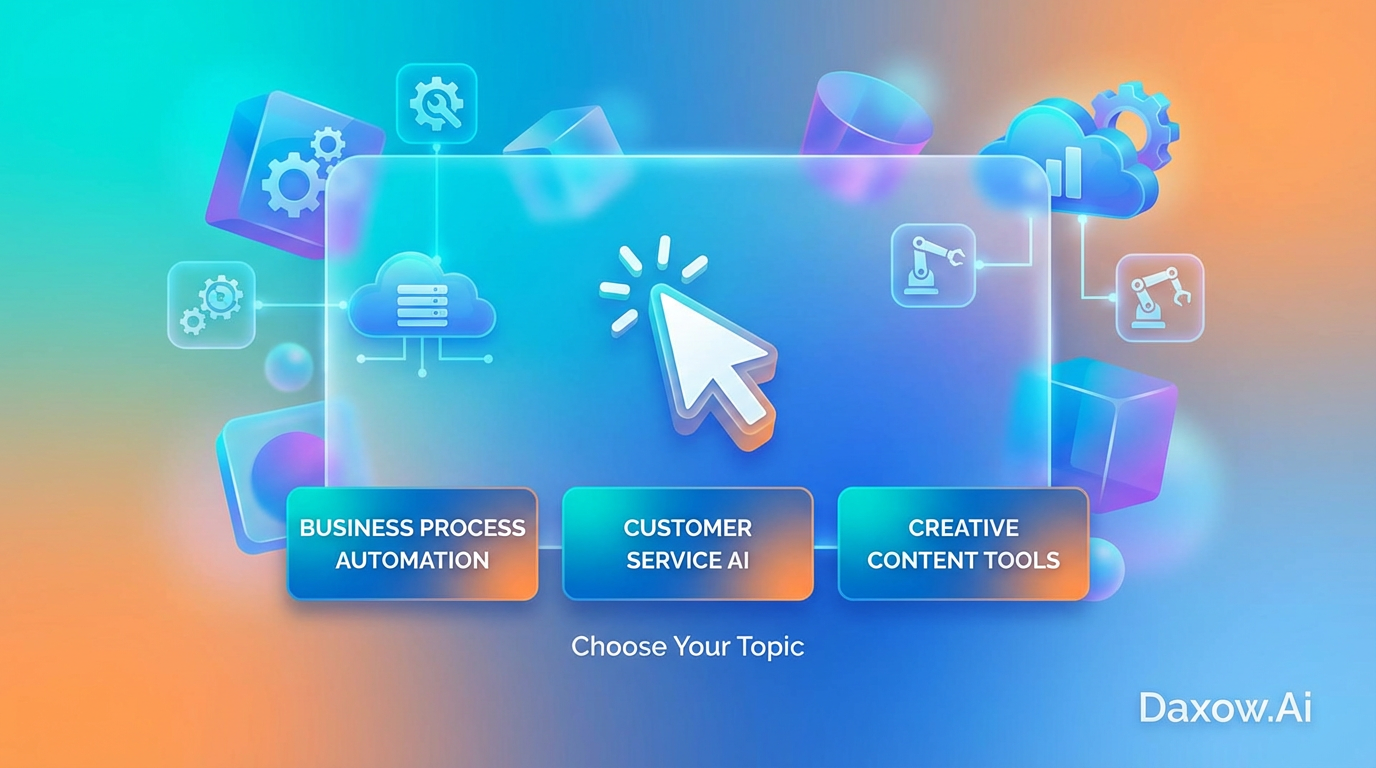
Prompt asking the client to pick an AI/automation blog topic from suggested options and confirm research, links, and any special focus.
Workflow Automation and Business Process Optimization: Transforming Modern Enterprises
Estimated reading time: 8 minutes
Key Takeaways
- Workflow automation streamlines repetitive tasks, reducing errors and improving efficiency.
- Business process optimization enables organizations to align operations with strategic goals.
- Daxow.ai offers advanced automation solutions tailored to enhance productivity across industries.
- Integrating AI-driven analytics unlocks actionable insights for continuous process improvement.
- Effective automation fosters better compliance, cost savings, and improved customer satisfaction.
Understanding Workflow Automation
Workflow automation involves using technology to execute recurring tasks or processes in a business where manual effort can be minimized. It replaces human intervention with software-driven workflows to ensure tasks are completed faster, consistently, and with fewer errors.
This automation covers various business areas including document approvals, customer onboarding, inventory management, and more. By automating workflows, companies can focus on high-value activities such as innovation and customer engagement.
Benefits of Business Process Optimization
Business process optimization (BPO) is the practice of analyzing current processes and refining them for better performance, efficiency, and agility. Combined with workflow automation, BPO delivers transformative benefits:
- Increased Efficiency: Streamlined processes reduce bottlenecks and eliminate redundant steps.
- Cost Reduction: Automated tasks save labor costs and reduce operational overhead.
- Improved Compliance: Automated workflows ensure audit trails and adherence to regulations.
- Enhanced Visibility: Real-time monitoring allows managers to track and optimize processes continuously.
- Higher Customer Satisfaction: Faster response times and consistent service improve user experience.
How Daxow.ai Enables Automation Excellence
Daxow.ai specializes in creating AI-powered automation tools that integrate seamlessly with existing systems, delivering smart business process optimization solutions. Their platform leverages machine learning and predictive analytics to intelligently automate workflows, adapt to evolving business needs, and scale effortlessly.
Key features of Daxow.ai’s approach include:
- Customizable workflow engines tailored to unique organizational requirements.
- Data-driven decision support with analytics integrated into automation pipelines.
- Robust integration capabilities with ERP, CRM, and other enterprise platforms.
- Continuous learning mechanisms to optimize workflows dynamically.
Learn more about how Daxow.ai supports business process automation and optimizes workflows for maximum efficiency.
Steps to Implement Automation Successfully
Achieving success with workflow automation and process optimization requires a strategic approach:
- Identify Key Processes: Map out high-impact tasks suitable for automation.
- Define Clear Objectives: Establish measurable goals such as reducing cycle time or error rates.
- Choose the Right Technology: Select platforms like Daxow.ai that align with organizational needs.
- Engage Stakeholders: Collaborate with department teams for buy-in and process insights.
- Implement Incrementally: Start with pilot workflows, analyze results, then scale automation.
- Monitor and Optimize: Use data analytics to continuously improve automated workflows.
Challenges and Solutions in Automation
While workflow automation offers substantial benefits, organizations may face challenges including resistance to change, legacy system integration, or process complexity. Effective strategies to overcome these include:
- Change Management: Providing training and clear communication to address user concerns.
- System Compatibility: Employing middleware and APIs to connect disparate tools smoothly.
- Process Simplification: Breaking down complex workflows into modular automated tasks.
- Regular Review: Continual assessment of process performance to adapt automation accordingly.
Daxow.ai’s expert consulting ensures smooth transitions to automation tailored to overcome specific customer challenges effectively.
Future Trends in Automation and Optimization
As AI and machine learning technologies advance, future trends shaping workflow automation and process optimization include:
- Hyperautomation: Combining multiple automation tools and AI to automate end-to-end business processes.
- Intelligent Process Mining: Utilizing AI to discover inefficiencies and optimize workflows proactively.
- Increased Personalization: Tailoring automated processes based on user behavior and preferences.
- AI-Augmented Decision-Making: Integrating predictive analytics to guide management strategies.
Embracing these trends with solutions like those from Daxow.ai ensures organizations remain competitive and agile in the evolving digital landscape.
Frequently Asked Questions
What is the difference between workflow automation and business process optimization?
Workflow automation focuses on automating repetitive tasks within a process, while business process optimization entails analyzing and improving entire processes to enhance overall efficiency and outcomes.
How does Daxow.ai support workflow automation?
Daxow.ai provides AI-driven automation platforms that integrate seamlessly with existing systems, offering customizable workflows, real-time analytics, and scalable solutions for varied industry needs.
What industries benefit most from business process automation?
Industries such as finance, healthcare, e-commerce, manufacturing, and real estate greatly benefit due to their high volume of repetitive, rule-based tasks and regulatory compliance requirements.
Can automation solutions be customized to my company’s specific processes?
Yes, platforms like Daxow.ai specialize in tailoring automation workflows to meet unique business processes, ensuring effective integration and maximized impact.