
Choose an AI Automation Topic for Your Article
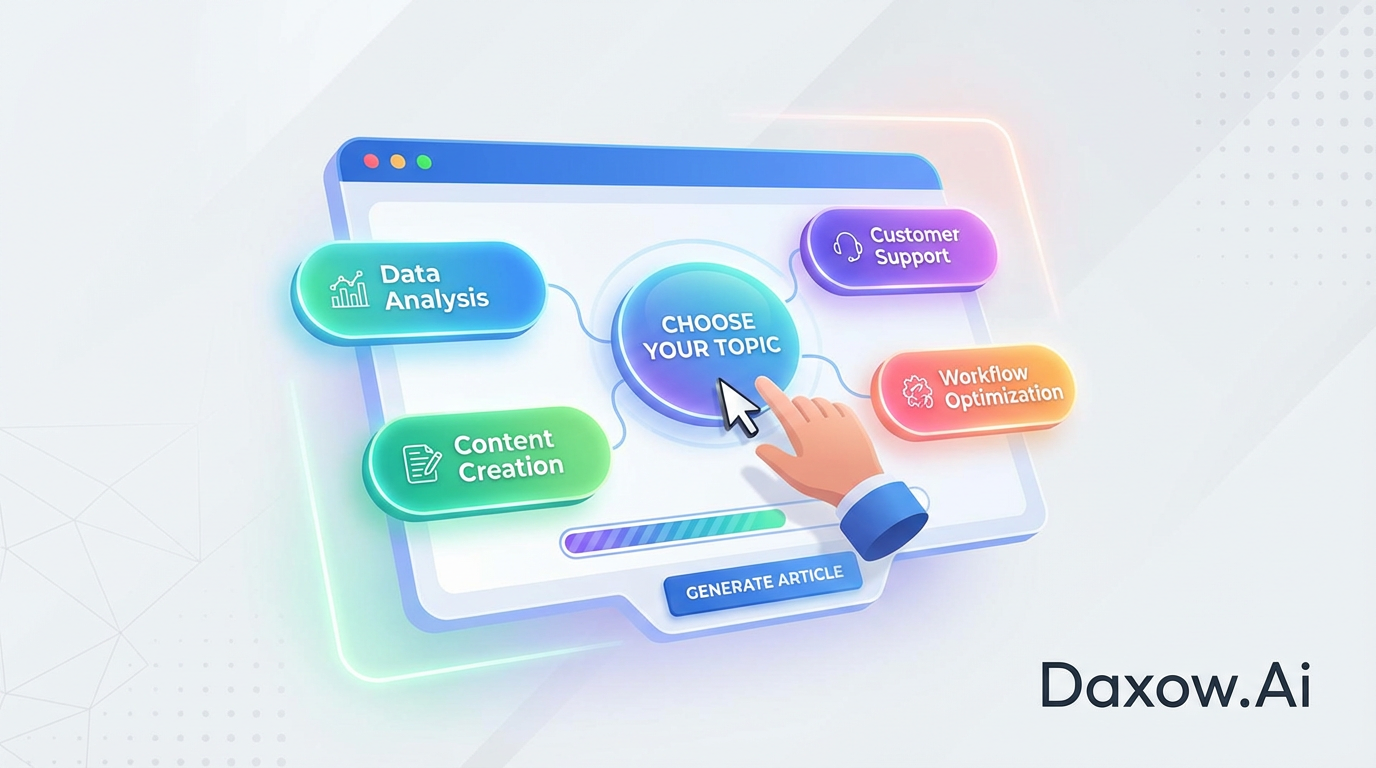
Pick an AI automation topic (workflow, customer service, document processing, etc.), specify industry focus and link preferences before a 1500–2000 word article is written.
AI Workflow Automation: Revolutionizing Business Efficiency
Estimated reading time: 10 minutes
Key Takeaways
- AI workflow automation enhances productivity by streamlining repetitive tasks.
- Integrating AI reduces operational errors and accelerates decision-making.
- Industry-specific AI solutions provide tailored advantages for sectors like enterprise SaaS and finance.
- Seamless integration with existing systems is critical for successful AI automation.
- Continuous monitoring and optimization ensure AI workflows remain efficient and scalable.
What is AI Workflow Automation?
AI Workflow Automation refers to the use of artificial intelligence technologies to automate and optimize operational workflows across organizations. By leveraging AI capabilities such as machine learning, natural language processing, and robotic process automation, businesses automate routine, repetitive, and data-intensive tasks. This integration allows workflows to be more adaptive, intelligent, and efficient compared to traditional automation methods.
Unlike basic rule-based automation, AI-driven workflows can learn from data patterns, improve decision-making over time, and handle exceptions with minimal human intervention. Whether processing invoices, managing customer inquiries, or streamlining employee onboarding, AI workflow automation empowers companies to reduce human error, save time, and increase operational agility.
Benefits of AI Workflow Automation
Implementing AI in workflows offers numerous benefits that can transform business operations:
- Increased Productivity: AI automates mundane tasks, freeing human resources for strategic activities.
- Cost Reduction: Automation reduces the need for manual labor, lowering operational expenses.
- Enhanced Accuracy: AI reduces errors caused by manual data entry and improves data consistency.
- Faster Processing: AI systems operate around the clock, accelerating task completion and response times.
- Data-Driven Insights: AI analyzes workflow data to identify bottlenecks and optimize processes continuously.
For detailed guidance on optimizing your AI implementations, see our process automation page.
Key Industry Applications
AI workflow automation serves diverse industries with tailored solutions. Below are some critical examples emphasizing enterprise SaaS and finance:
- Enterprise SaaS: Automating customer onboarding, subscription billing, and support ticket routing improves user experience and retention. AI-powered analytics optimize feature usage and reduce churn.
- Finance: Automating loan approval workflows, fraud detection, and compliance monitoring reduces risk and accelerates decision-making while ensuring regulatory adherence.
- Healthcare: AI automates patient record management, appointment scheduling, and claims processing to enhance service delivery.
Explore our AI agents for business operations to see how automation can be customized for your sector.
Implementing AI Workflows Effectively
Successful AI workflow automation requires a strategic approach:
- Identify High-Impact Processes: Start with workflows that are repetitive, rule-based, and voluminous.
- Data Preparation: Ensure data quality and availability to train AI models effectively.
- Integration with Legacy Systems: Use APIs and middleware to connect AI tools with existing platforms like CRMs and ERPs.
- Employee Training: Equip staff to monitor, adjust, and optimize AI workflows continuously.
- Iterative Improvement: Use feedback loops and analytics to refine automation and expand coverage over time.
Our case studies showcase best practices in AI workflow implementations done by leading organizations.
Common Challenges and How to Overcome Them
While AI automation presents immense opportunities, it also introduces challenges:
- Data Silos: Fragmented data can limit AI effectiveness. Establish centralized data repositories.
- Change Management: Resistance from employees can hamper adoption. Focus on transparent communication and training.
- Technical Complexity: Integration and maintenance require skilled personnel or trusted partners.
- Security and Compliance: Automating sensitive processes demands strict adherence to regulations and best security practices.
Consult our expert team for tailored solutions to navigate these challenges smoothly.
Future Trends in AI Workflow Automation
Looking ahead, AI workflow automation is evolving rapidly. Key trends include:
- Hyperautomation: Combining AI, machine learning, and advanced analytics to automate increasingly complex workflows end-to-end.
- AI-Powered Decision Systems: Greater use of prescriptive analytics enabling machines to not only automate but also recommend next-best actions.
- Natural Language Interfaces: Enhancing human-AI interaction through conversational AI to manage workflows intuitively.
- Edge AI: Deploying AI closer to data sources for real-time automation in sectors like manufacturing and IoT-based systems.
Stay ahead by visiting our blog for the latest insights on AI automation innovations.
Frequently Asked Questions
What types of tasks can AI workflow automation handle?
AI workflow automation can manage various tasks, including data entry, invoice processing, customer service interactions, compliance checks, and report generation, among others.
How do I measure the success of AI automation?
Measure success by evaluating key performance indicators such as task completion time, error rates, cost savings, employee productivity, and customer satisfaction.
Is AI workflow automation suitable for small businesses?
Yes, small businesses can benefit by automating repetitive tasks, increasing efficiency, and enabling staff to focus on growth-driving activities. Scalable AI solutions cater to businesses of all sizes.
How does AI workflow automation integrate with existing software?
Integration is typically done via APIs, connectors, or middleware platforms that connect AI tools with current systems like CRMs, ERPs, and communication platforms to create seamless workflows.