
Confirm Topic & Research for AI Automation Article
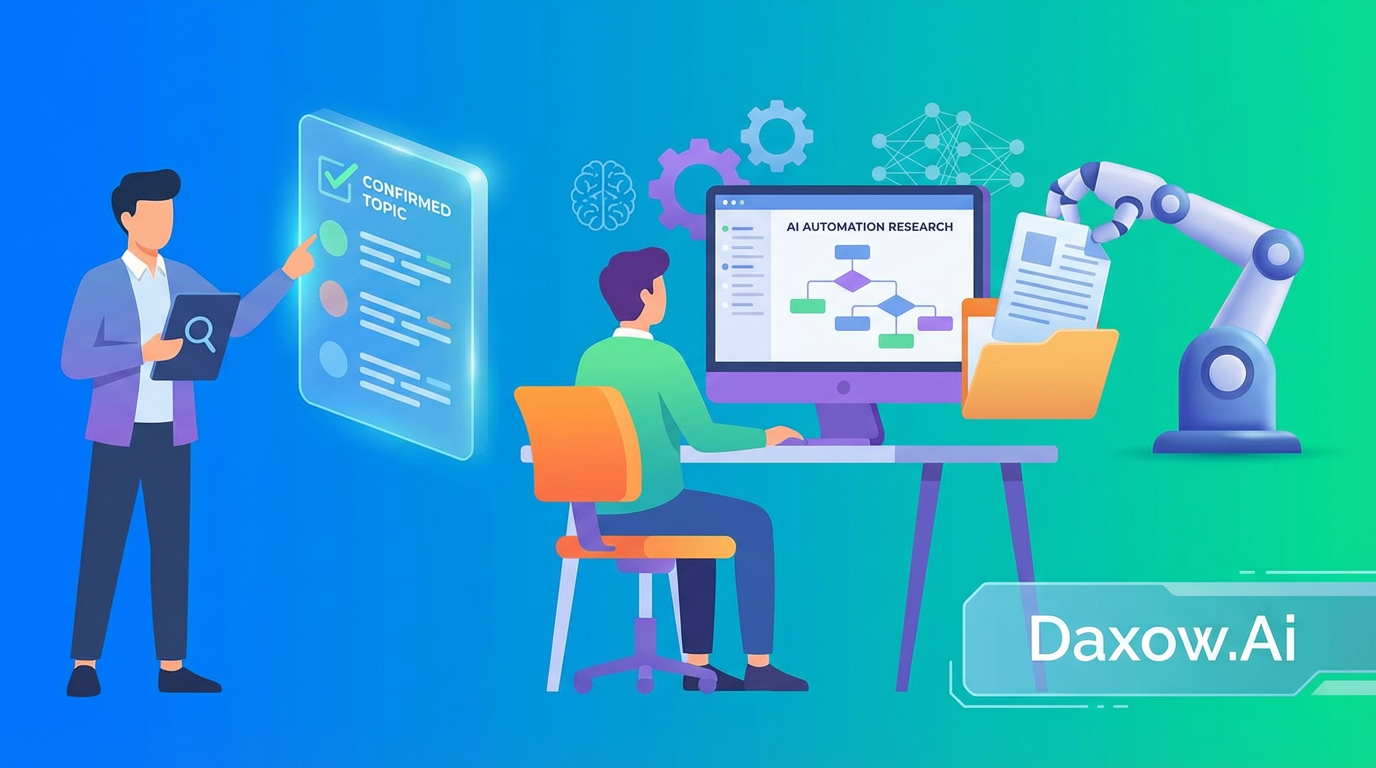
Author requests you confirm the specific AI automation topic, supply research and SEO keywords, and any preferences before drafting the 1,500–2,000 word article.
AI Agents for Customer Service Automation: Transforming Business Support
Estimated reading time: 12 minutes
Key Takeaways
- AI agents are revolutionizing customer service by automating routine interactions and reducing manual tasks.
- Integration of AI-driven workflow automation enhances productivity and customer satisfaction across industries.
- Implementing AI agents improves response times, reduces operational costs, and allows human agents to focus on complex issues.
- Trusted case studies demonstrate success in sectors including finance, healthcare, and e-commerce.
- Daxow.ai offers tailored AI automation solutions that seamlessly integrate with existing business processes.
AI Agents for Customer Service Automation
Artificial intelligence (AI) agents have emerged as a pivotal technology in customer service automation, reshaping how businesses interact with their customers. These intelligent systems use natural language processing, machine learning, and pattern recognition to autonomously manage routine customer inquiries, resolve common issues, and deliver personalised support experiences in real-time. By automating repetitive tasks, AI agents reduce the need for manual intervention, streamline workflows, and free human agents to focus on more complex, high-value interactions.
Leading companies are leveraging AI-driven customer support automation to boost efficiency and customer satisfaction. These AI agents operate 24/7, ensuring customers receive immediate assistance, which significantly improves response times and reduces friction in the support journey. From simple FAQs to multi-step troubleshooting, AI agents encompass a variety of applications including chatbots, voice assistants, and virtual support agents.
Benefits of AI Automation in Customer Support
The adoption of AI agents for customer service automation offers numerous business advantages:
- Increased Productivity: AI agents handle large volumes of inquiries simultaneously without fatigue, drastically increasing overall support productivity.
- Reduced Manual Tasks: Automating routine questions and workflows minimizes repetitive work, allowing staff to redirect focus on personalized, complex issues.
- Cost Efficiency: Businesses cut operational expenses by reducing dependence on large support teams while maintaining or improving service quality.
- Enhanced Customer Experience: AI enables instant responses and 24/7 availability, leading to higher customer satisfaction and loyalty.
- Scalability: Support infrastructure scales dynamically with AI agents, accommodating seasonal or unexpected spikes in customer demand.
- Data-Driven Insights: AI systems gather interaction data that can optimize future workflows and identify emerging customer needs.
Industry Use Cases
AI automation in customer service is transforming multiple sectors. Below are some illustrative examples of AI agents improving customer support workflows:
- Finance: AI-powered chatbots in banking automate balance inquiries, transaction histories, and fraud alerts, reducing wait times and enhancing security.
- Healthcare: Virtual assistants provide appointment scheduling, prescription refills, and symptom triage, facilitating better patient engagement and reducing administrative burden.
- E-commerce: AI agents support product recommendations, order tracking, and returns processing, creating a seamless shopping experience and boosting sales automation.
- Telecommunications: Automated support resolves network issues, billing queries, and service upgrades instantly, improving customer retention.
Daxow.ai specializes in integrating AI agents that align perfectly with industry-specific workflows, ensuring business automation translates into tangible ROI.
Implementing AI Agents Effectively
Successful deployment of AI agents requires a strategic approach combined with the right technology:
- Assessment of Use Cases: Identify repetitive, rule-based customer interactions suitable for automation to maximize impact without compromising service quality.
- Integration with Existing Systems: Ensure AI agents connect smoothly to CRM, ticketing systems, and knowledge bases to provide coherent support experiences.
- Customization and Training: Tailor AI responses to match company tone and culture. Continuously train models using real customer interaction data for improved accuracy.
- Human-Agent Collaboration: Enable seamless escalation paths to human agents for complex issues, balancing automation with human touch.
- Monitoring and Optimization: Leverage analytics to track AI agent performance, customer satisfaction scores, and response metrics, iterating improvements over time.
Partnering with solutions like Daxow.ai’s AI automation services ensures an expert-guided implementation with robust support for workflow automation tailored to your business.
Measuring Success and Optimization
To evaluate the effectiveness of AI agents in customer service automation, businesses should monitor key performance indicators (KPIs):
- First Response Time: Track how quickly AI agents answer customer queries.
- Resolution Rate: Measure the percentage of issues fully resolved by AI without human intervention.
- Customer Satisfaction (CSAT): Use surveys to assess customer perception of AI interactions.
- Cost Savings: Analyze reductions in support staffing costs and operational expenses.
- Agent Utilization: Monitor how the workload balance shifts between AI and human agents.
Continual refinement using these metrics helps evolve AI agents’ capabilities, offering enhanced productivity and driving stronger business automation outcomes. Explore detailed insights and case studies in our Daxow.ai knowledge center.
Frequently Asked Questions
What types of customer queries can AI agents handle?
AI agents are best suited for routine, rule-based inquiries such as order status, account balances, appointment scheduling, troubleshooting common issues, and FAQs. More complex or sensitive topics can be seamlessly escalated to human agents.
How do AI agents improve customer satisfaction?
By providing instant, accurate responses around the clock, AI agents reduce wait times and increase accessibility. This leads to faster problem resolution and a more positive overall customer experience.
Is it difficult to integrate AI customer service agents with existing systems?
Modern AI solutions are designed for easy integration with CRM platforms, ticketing systems, and databases through APIs and custom connectors, minimizing disruption to current workflows.
Can AI agents handle multi-language customer support?
Yes, many AI agents are equipped with multilingual capabilities and natural language processing models that enable them to communicate effectively with diverse customer bases.